

|
|
|
|
| VHF: Canal 77 |  |
 |
 |
 |
 |
|
|||||||
| Avisos | ||||
|
 |
|
|
Herramientas | Estilo |
|
|
|
#1
 14-10-2013, 20:16
|
||||
|
||||
 Re: Vancouver 27 o 28
Cita:

|
|
#2
14-10-2013, 22:41
|
||||
|
||||
|
Re: Vancouver 27 o 28
ok voy entendiendo poco a poco el porque de la decisión. Es que de barcos, ya sabes......lo justito.
He hecho una comparación con un programa que me parece muy interesante, tu sueño contra el mio, y el resultado es demoledor ( sin tener en cuenta ciertos aspectos)  . .
__________________
La vida es aquello que te va sucediendo mientras tú te empeñas en hacer otros planes.
|
|
#3
14-10-2013, 22:54
|
||||
|
||||
|
Re: Vancouver 27 o 28
Cita:
"Measure of the boat's up-and-down jumpiness due to waves. Uses displacement, LWL, LOA and Beam. Rough classifications: >40 slow motion 25-40 moderate motion <25 quick motion" ...Y del Capsize Ratio... "How likely a boat is to recover from a capsize, based on beam and displacement. A quick and dirty measure of offshore suitability. Down from 2 is considered increasingly quick to recover. Above 2 is increasingly likely to stay turtled. " Datos extraidos de la web "Cruisingresources" Vaya que el Capsize por debajo de 2 es bueno y un Comfort Motion RAtio más de 40 marea menos que uno entre 25 y 4o ,y éste menos que uno por debajo de 25. Editado por scampolo en 14-10-2013 a las 22:58.
|
| Los siguientes cofrades agradecieron este mensaje a scampolo | ||
port bo (15-10-2013) | ||
|
#4
14-10-2013, 23:09
|
||||
|
||||
|
Re: Vancouver 27 o 28
Gracias Scampolo por el aporte.
Espero no le moleste a Port bo y no sea motivo de destierro ( el mio )  Solo que para los que no sabemos mucho de naves, los vemos todos muy parecidos y si, el peso y ciertos parámetros dan idea de las grandes diferencias, pero hasta que no lo ves y te lo explican, se hace difícil de entender. La distribución es algo diferente a lo que estoy acostumbrado a ver y seguro que no es así por casualidad. Los barcos no suelen ser de una forma u otra por casualidad. Veo que uno de los astilleros que lo construyeron, fueron los mismos que construyeron el Florence May de Kibo.......me equivoco ? Eso dice mucho del barquito.
__________________
La vida es aquello que te va sucediendo mientras tú te empeñas en hacer otros planes.
|
| Los siguientes cofrades agradecieron este mensaje a TAMAMOANA | ||
port bo (15-10-2013) | ||
|
#5
14-10-2013, 23:44
|
||||
|
||||
|
Re: Vancouver 27 o 28
Port Bo, no te olvides del Victoria 26, del gran diseñador Chuck Paine.
Más asequible en precio que el vancouver y tan magnífico barco y con tan buena fama y prensa como el Canadiense. Algún cofrade de aquí tiene uno, y es una auténtica pasada. En diseño son casi clavados. Y tienes muchísima más oferta que los Vancouver, aunque también son barcos caros y escasos. Efectivamente algunos Vancouver tambíen fueron fabricados por el tandem Pacific Seacraft-Pacific Asian Enterprises (actualmente Nordhavn) con astilleros y mano de obra en Taiwan (Ta-Shing). Estos astilleros fabrican hoy en día los más caros y lujosos trawlers para todo el mercado americano. Efectivamente Tama, estos barcos son cosa fina Aquí alguna foto del Victoria 26 http://www.yachtsnet.co.uk/archives/...toria%2026.htm 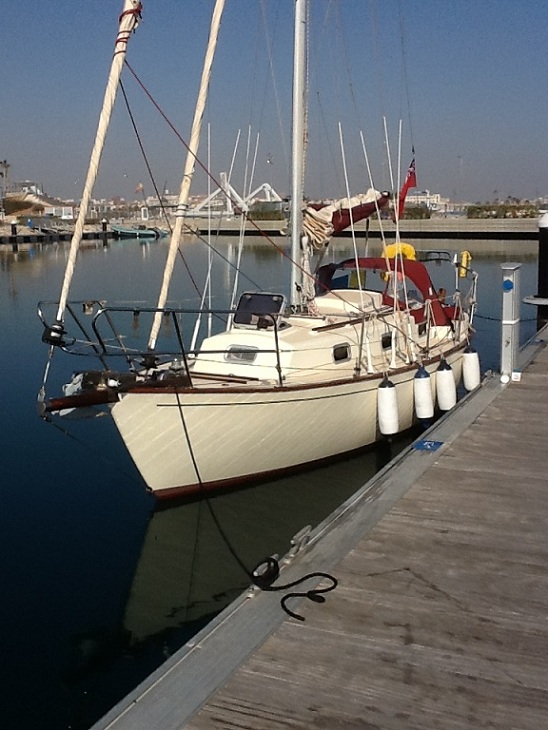 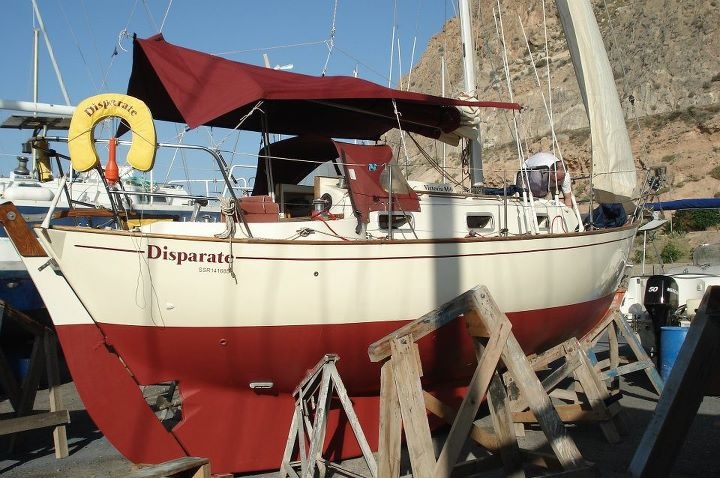
__________________
Mi blog en: Sailing Florence May.
|
| Los siguientes cofrades agradecieron este mensaje a KIBO | ||
TAMAMOANA (15-10-2013) | ||
|
#6
15-10-2013, 07:40
|
||||
|
||||
|
Re: Vancouver 27 o 28
Kibo,
. No me habia fijado en el Victoria 26  . Es un barco a tener en cuenta tambien . Es un barco a tener en cuenta tambien  .Me gusta la popa que tiene y la distribucion interior es casi clavada al V 27. Gracias por la aportacion. Seguire estando ojo avizor . Al final tendre que hacerlo a cara y cruz . Saludos. .Me gusta la popa que tiene y la distribucion interior es casi clavada al V 27. Gracias por la aportacion. Seguire estando ojo avizor . Al final tendre que hacerlo a cara y cruz . Saludos.
|
|
#7
15-10-2013, 08:28
|
||||
|
||||
|
Re: Vancouver 27 o 28
Comentarios del diseñador Chuck Payne sobre el victoria 26 diseñado en 1974 (en los EEUU se comercializan bajo el nombre de Frances y en el RU, bajo el nombre de Victoria):
"I designed Frances for my own use. She was to embody everything I knew about the design of efficient cruising vessels of GRP construction, to be capable of yearly cruises to and among the Caribbean Islands, to be small enough to fit my limited budget yet large enough to survive a gale at sea. She is small enough for me to handle the little maintenance required with GRP construction, capable of being laid up alongside a local lobsterman's wharf on an outgoing tide for periodic attention to the bottom, or even towed behind a good Maine Peapod if the engine and wind should choose to die simultaneously. Frances is a small boat. She does not have full headroom, although there is now a coachroof deck plan giving 1.8m headroom, but she does have lots of sitting room. A great deal of attention has been paid to stowage space, but any experienced cruising sailor knows that space is no good if the displacement and freeboard of the yacht are such that, should that space be occupied by useable supplies, she would float halfway up her sides. Load Frances with your cruising gear and she won't show it, in appearance or performance. Many an ocean passage has been made in smaller boats. She's a double-ender. Not as fast as a transom or counter stern, but not much slower either, and the sea keeping qualities are so well known as not to require repeating here. Many long hours were devoted to developing the hull shape, including the carving and gradual perfection of a half model. The entry is modelled quite sharply and the keel extension is carried right up to the canoe body of the hull with a very tight fairing radius. This allows the entire keel to act as a vertical wing and thus prevent leeway. The rig is tall and narrow, increasing the leading edge of the sails. These three factors make Frances a weatherly boat. She has quite high freeboard, with bulwarks around the forward and aft decks. They have gone out of fashion on racing boats, but once you sail with decent bulwarks as well as lifelines betwixt yourself and the hereafter, you won't want to go to sea again on a boat that is not so equipped. Amidships, the high freeboard combined with a flush deck are responsible for all that lovely room below decks. I wanted a boat which could carry her sail well. On the other hand, I wanted the desirable wave performance of a tender boat. That is, one which is an easy roller. There was only one solution to this conflict. I got the sail carrying ability from the moderately heavy displacement and achieved an easy motion by shaping the hull sections with a high angle of deadrise and very easy bilges. The result is a hull which is easily driven and has relatively less wetted surface for her length than many yachts in her size range. Frances sports a rather tall, 7/8 or cutter rig. This gives a great proportional area to the mainsail, which is only proper on a pure cruising yacht which does not attempt to cheat a rule which favours foretriangle area. It's easier to reef a main on a blustery night than go forward and change down to a smaller jib. For the fellow who intends to spend his time making long open water passages, the cutter rig offers a lower sail plan and more choice to achieve a balanced and more manageable spread of sail." Para más información puedes consultar la página de la asociación: http://www.victoriashadow.co.uk/index.php salud y libertad scipio
__________________
¿Por qué seguir tendencias si puedes seguir el viento? El proyecto es el borrador del futuro. A veces, el futuro necesita cientos de borradores.
|
| Los siguientes cofrades agradecieron este mensaje a cónsul scipio | ||
port bo (15-10-2013) | ||
|
Ver todos los foros en uno |
| Herramientas | |
| Estilo | |
|
|









 Modo híbrido
