

|
|
|
|
| VHF: Canal 77 |  |
 |
 |
 |
 |
|
|||||||
| Avisos | ||||
|
|
|
Herramientas | Estilo |
|
#15
 16-03-2014, 18:13
|
||||
|
||||
 Re: Porque la velocidad de los barcos se miden en nudos?
El original no parece que mejore mucho:
Why the Speed of Seafaring Vessels is Measured in Knots Daven Hiskey March 14, 2014 3 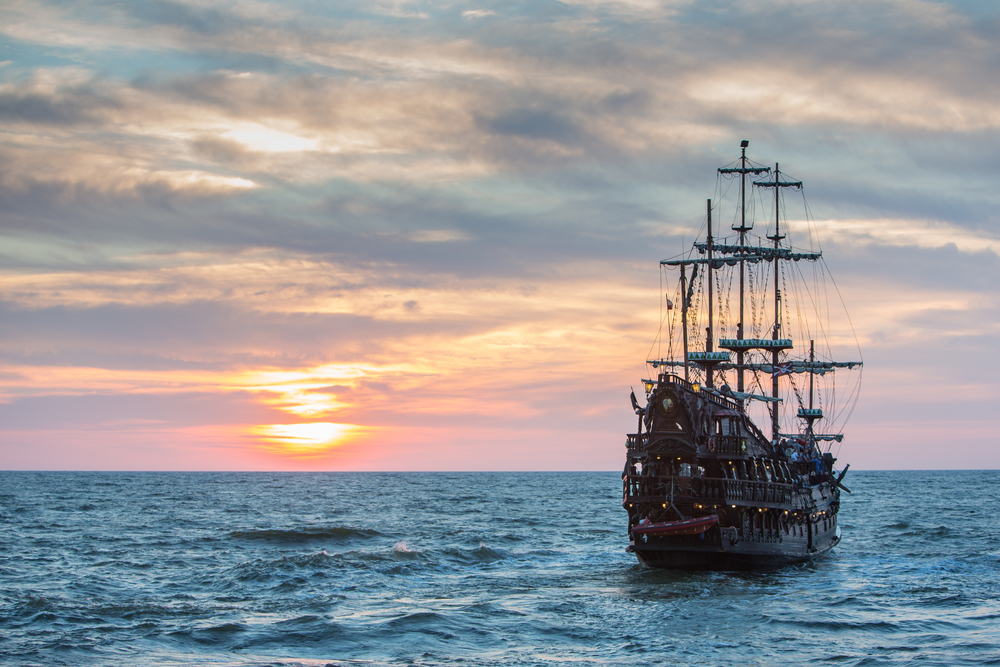 How fast you’re going while out floating on the big blue can be notoriously tricky to judge if you’re just eyeballing it. One method used to get around this issue was introduced in the sixteenth century using a “chip log” or “log-line.” In a nutshell, this method used a plank of wood (usually wedge shaped and weighted on one end so it would float perpendicular to the water to increase drag) tied to a long thin line that had knots tied at evenly spaced intervals. The wood would be tossed into the water and the line let out while a sailor used a sand-glass to time the number of knots let out in the given timespan. As for the interval and the time-span, this varied somewhat in the beginning, but for reference, one mid-eighteenth century version (attested in A Voyage to South America by Jorge Juan and Antonio de Ulloa) had the knots at 1/120th of a mile with a 30-second timer. This has all since been standardized based on the nautical mile (today equaling 1.852 kilometers). One knot then equals one nautical mile per hour. In landlubber terms, this is about 1.15 miles per hour or 1.852 kilometers per hour. More pertinently, this is equal to 1/60th a degree of latitude or longitude or one minute of arc (assuming the Earth is a perfect sphere, which it’s not -being squashed at the poles and bulging in the middle -but this is a good enough approximation). Thus, if you were traveling at one knot, it would take you approximately 60 hours to go 1 degree of longitude or latitude. So, today, if you’re using a 28-second timer, to get your accurate speed in knots, you need to have the interval of knots at 14.4018 meters (47 feet, 3 inches). The number of knots that are unrolled during that span is your speed in knots. Aquí si que cita un reloj de arena de 30 segundos. Pero sigo sin entender porque después pone el ejemplo con 28 segundos. Con respecto al desarrollo de los hilos, creo que hay que ser consciente de lo dispares que pueden ser las actitudes, los conocimientos y las opiniones y no vale la pena envenenarse la sangre ante modos de ver diferentes al propio (sea cual sea la causa de esa diferente visión). Y sin afán ninguno de polemizar, si que creo que las opiniones pueden y deben existir en ciencia. A lo largo de su historia hemos visto como distintas teorías al parecer inamovibles han ido cayendo sustituídas por otras más aproximadas a la realidad. La razón es solo un instrumento más de percepción, muy importante, eso sí, y fundamental a la hora de entendernos, pero en mi opinión  , bastante limitado. ¿O se hace igual de largo el recorrido por un minuto de grado de esfera terráquea con calma chicha y las velas hechas un moco que con una fresca brisilla que las hincha con alegría???? , bastante limitado. ¿O se hace igual de largo el recorrido por un minuto de grado de esfera terráquea con calma chicha y las velas hechas un moco que con una fresca brisilla que las hincha con alegría???? 
__________________
"Se o remo rompe polo guión, paga patrón, se rompe pola pala, patrón paga" 
|
|
|





 Modo de árbol