

|
|
|
|
| VHF: Canal 77 |  |
 |
 |
 |
 |
|
|||||||
| Avisos | ||||
|
 |
|
|
Herramientas | Estilo |
|
#1101
 18-08-2016, 23:11
|
||||
|
||||
 Re: Veleros pequeños
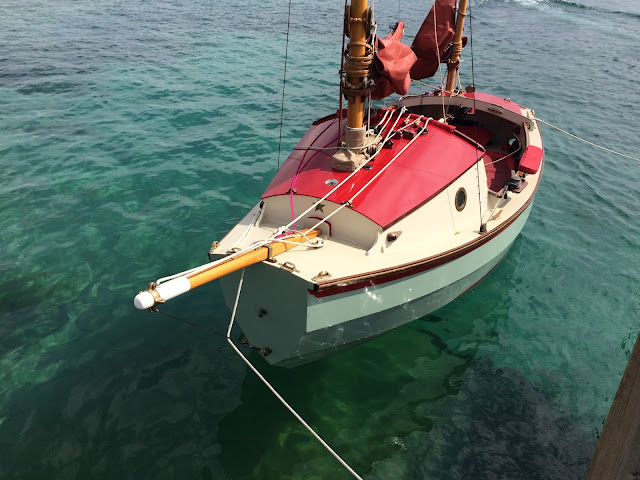 El aventurero Howard Rice ha construido con esmero un Scamp (diseño de John Welsford) y acaba de comenzar las pruebas http://thepocketyacht.blogspot.com.es/ su intención es llevarlo a Chile en un contenedor e ir a dar un paseito por la Patagonia y el Cabo de Hornos (años atrás este aventurero estuvo por la Patagonia con un kayak) 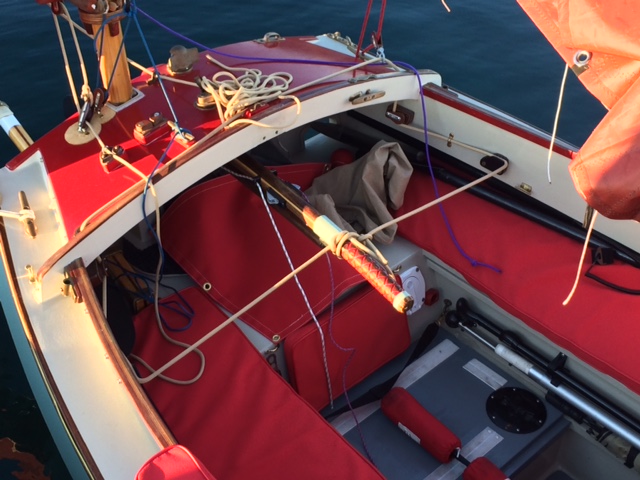 
|
|
#1103
19-08-2016, 07:52
|
||||
|
||||
|
Re: Veleros pequeños
La elección del tipo de vela del barco de Howard Rice, es por alguna razón porlo que lo prefiere al tipo de vela que se utiliza habitualmente en la actualidad?
Presenta alguna ventaja, o es por estética? Saludos y buen viento.
__________________
Me esperan los dias que pretendo llenar y que me hagan vibrar. Y aprendiendo mi vida solo quiero sentir que no es vida perdida
|
|
#1104
19-08-2016, 08:31
|
||||
|
||||
|
Re: Veleros pequeños
Según el blog, es la elegida por el tipo de navegación y condiciones de mar que espera encontrar en tierra de fuego.
Sencilla, con múltiples combinacionales. Hay una entrada que lo explica. Saludos
__________________

|
|
#1105
19-08-2016, 08:47
|
||||
|
||||
|
Re: Veleros pequeños
Cita:
No pensaba que era un aparejo sencillo, por lo que resulta interesante. Saludos
__________________
Me esperan los dias que pretendo llenar y que me hagan vibrar. Y aprendiendo mi vida solo quiero sentir que no es vida perdida
|
|
#1106
19-08-2016, 09:37
|
||||
|
||||
|
Re: Veleros pequeños
No he podido hacer un enlace.
Saludos A Rig For Southern Cross By Southern Cross Designer- John Welsford (aka- The Pesky Kiwi Pun King) Genesis “Howard and I collaborated on a different rig for his SCAMP, one specifically designed for the environment in which he will be using it. After much thought he settled on a split rig utilizing a gaff main and I drew it from his base design. Howard has a strong like of a gaff rigged main from experience and suggested the value of the split rig for a number of sensible reasons. His innovation of the running shrouds (not back stays) is a key element to the safety aspect of the rig. So why not use the lug rig that moves SCAMP so well in her normal waters? Lets have a look at that. With that single large sail SCAMP won't heave to in the conventional sense, they “Park” (Howard coined that apt phrase). That’s broadside on, and they will sit there happily as long as you want, not going anywhere. SCAMP's are safe “parked” in waves up to about a meters and a half high. That’s close to five feet. Big wave for a little boat and very few small boats will ever be out on the water in those conditions. Where Howard is going there can be waves up to ten times that high. ( that’s on a good day) The boat has to be able to sit hove to head to wind and, the single big sail wont do that. Sail Reduction- We normally put three lines of reefing points onto a SCAMP sail, if the wind is such that there is still too much sail up when on the last reef, its pull the sail right down and sit in the bottom of the boat to wait out the squall. But where Southern Cross is going ,control in sustained extremely high winds is imperative and the single big sail doesn’t give the choices in sail reduction that are needed. IN addition hoisting and striking the single lug sail in extreme or gusty conditions could prove problematic for Howard. Damage- With one big sail the loads on that sail and its systems are high, SCAMP has extraordinary stability for a small boat but the loads on the rig are higher than you’d expect. Any failure leaves the boat drifting with little chance of improvising a jury rig, and Southern Cross is going where no small boat has ever been before ( I tried to work a Star Trek quote in there but that has to be near enough), and there is no chance of support or repair, so there has to be a lot of redundancy in the setup. The ability to create a rig out of the wreckage should she be rolled and dismasted is beyond important, it may be the only answer in a life or death scenario. So with all of this and a few other criteria in mind I set out to draw the rig that Howard called for and that would be ‘fit for purpose”. The gaff yawl is a powerful rig- It is not particularly close winded but it generates a lot of drive for a given heeling force. In simple terms, that’s more drive for the amount of stability that the boat has. In heavy weather few boats will sail close to the wind anyway, and small boats more so than big ones so I drew a rig that would produce the most thrust at the wind angle that will be practical in those conditions. A gaff mainsail means a relatively short mast, strong, easy to manage should it need to be pulled out for work, with low windage and light in weight. With three sails, reef points on the main and the ability to change jibs there are many different combinations available. Dropping the mizzen and main for example will work when reaching or running before a squall, the small jib being easy to control at any angle to the wind. When sailing across or upwind the main can be reefed, reefed several times until its time to drop it completely, and with jib and mizzen the boat is still balanced, easy to control and able to heave to if needed. The Mizzen Sail In spite of what some write about mizzens that little sail is really useful, it enables the boat to be hove to head to wind, can be used to manage the weather helm enabling the boat to self steer, a huge help on long days, and remember, summertime in the deep south means that there can be daylight for 20 hours. The ability to let the boat sail herself is a real help to the singlehanded skipper wanting to rest, navigate, eat or make repairs under way. With the jib on a roller furler, that sail can be “disappeared” when needed (down and all the way back into the cockpit until needed), and a bigger drifter set flying, all without leaving the safety of the cockpit. There are days of calm weather in the region and Howard’s strategy is to sail as quickly as possible to take advantage of these breaks. Southern Cross can set a lot of sail in those conditions. Staying- Now here’s where one of the big differences appear. The mainmast is not stayed in the normal sense, in fact it does not need stays at all. When capsized, or overpowered running off downwind, the mainsail can be pinned against the stays, in the former case that makes it very difficult to manage when righting as it will try and drive the boat forward or capsize her again as it comes up. In conventional boats its necessary to swim the boat around head to wind to prevent this, but in these cold waters, and in the sort of conditions that might capsize this little ship that’s not a good thing. Should Howard capsize and chances are he may and more than once time will be of the essence. He has to my knowledge tested and learned from some 60 SCAMP capsizes both solo and with crew in teaching and demonstrations. Howard was also a key player in the initial capsize tests conducted on the prototype SCAMP #1. He knows the boat both upright, turtled and on her side likely better than anyone else. He and I have had the opportunity to really understand the mechanics of avoiding capsize and how to execute fast righting and re-entry should it happen. With the free standing mast, the sail can swing downwind wherever the boat lies relative to the wind and with the main luffed, the mizzen and job sheets free, she will lie quietly. Going downwind in a heavy squall can be dangerous, and believe me this area is prone to them, walls of spray hundreds of metres high, appearing out of nowhere, coming at you at 60 knots is not uncommon! The ability to let the main “flag” forward is a real help, round the boat up to about 45 deg off dead downwind, let the running shroud on that side go and dump the mainsheet then point her back downwind again and the main will swing around fully depowered off the bow. With the jib rolled up or fully struck and the mizzen also swung around its unstayed mast the boat is unpowered, just being pushed along at a controlled rate by the windage of her hull and spars, but is still able to be brought under sail in an instant to clear a lee shore or sail into a confined space. The mainmast is supported by a running shroud on each side. It’s strong enough to stand unstayed, but the inevitable flex affects the luff tension on the jib, so she has the “running shrouds” there to control that. An aditional benefit of those is to facilitate a jury rig should that be needed. Damage Again In case of a broken mast, the main boom is long enough to make a replacement, the mizzen mast is long enough and with the jib, and the running shrouds to hold it up its tall enough to allow the reefed main with its gaff to be set as a loose footed lugsail which will power the boat sufficiently to make some progress. Again, sailing along the Pacific coast south of the Straights of Magellan is extreme sailing and plain risky, there is little or no chance of assistance should anything go wrong. The skipper has to be able to fix, or rejig the rig in case of breakage minor or major so the rig which Howard has developed has much redundancy built in. I was honoured to have him send me his version of the rig asking that I examine it, refine it and finalize it. We can’t plan for every eventuality, but have done our best to anticipate what the brave little ship will meet, and are confident in her abilities.
__________________
|
| Los siguientes cofrades agradecieron este mensaje a morfeo | ||
X TUTATIS (19-08-2016) | ||
|
#1107
19-08-2016, 11:34
|
||||
|
||||
|
Re: Veleros pequeños
Gracias
Cita:
__________________
Me esperan los dias que pretendo llenar y que me hagan vibrar. Y aprendiendo mi vida solo quiero sentir que no es vida perdida
|
|
#1108
19-08-2016, 12:28
|
||||
|
||||
|
Re: Veleros pequeños
Es lo bueno de la construcción para cliente o de la autoconstruccion. Se diseña para tu plan de navegación o facultad física.
Astillero pequeño local, ese debería ser el camino. Saludos
__________________
|
|
#1109
19-08-2016, 12:30
|
||||
|
||||
|
Re: Veleros pequeños
Cita:
Un buen astillero cercano y proximo que escuche tus necesidades que se adapte a tus gustos y que en caso de problema lo tengas ahi...... No tiene precio
|
| Los siguientes cofrades agradecieron este mensaje a X TUTATIS | ||
Luigra (02-09-2016) | ||
|
#1110
20-08-2016, 11:05
|
||||
|
||||
|
Re: Veleros pequeños
Funcionalidad, funcionalidad, funcionalidad
con los trajes secos actuales estos aventureros incluso pueden salir vivos; pero me deja pasmao la serenidad y determinación mental además de la forma física de este tipo de aventureros minimalistas (por otro lado de los minimalistas no entiendo cómo encajan toda la carga y todo los chismes, cuando leo por ejemplo la enorme lista de lo que llevaba Robert Manry en su diminuto botecito no me lo explico) veamos algunas cosas de este bicho de 12 pies de eslora aparejo de yola, mayor con cangreja y botalón este es un aparejo realmente marinero: funciona es un velero que funciona viento a favor -hay una mayor de forma adecuada para navegar a favor del viento (de ahí la neocangreja de los minitransat) -la mayor con cangreja es muy fácil de arriar, siempre baja -y se equilibra con la vela de proa en un botalón y cazada al centro, y el velero navega solo, Joshua Slocum cuenta que estuvo algo así como 22 días sin tocar el timón sólo ajustando la vela de proa: se pone el viento "a dos cuartas" de la popa, unos 22 grados, la mayor completamente abierta y la vela de proa cazada al centro y los veleros del siglo XVIII y XIX navegaban solos a favor del viento, los minitransat necesitan carísimos pilotos NKE con giróscopo) ceñida con trapo a popa se consigue un equilibrio aero-nautico, un Equilibrio estable como el de un avión de pasajeros, el timón del velero es el timón de profundidad del avión: el Equilibrio ocurre a popa del centro de gravedad capear se baja el foque y la Mayor ... y con la mesana que no llaman mesana (mizzen) sino jigger cazada al centro el velero aguanta proa a las Olas ... dejando tiempo para si la cosa va a peor pasar a modo supervivencia: lanzar un paracaídas como los que usan los botes de remo oceánico (lleva paracaídas de la marca para-tech, pero para este tamaño pienso que valdría un saco para escombros) legados a este punto el aventurero baja toda la jarcia y se mete debajo de un toldo-tienda (la cabinita no es tal, sino una burbuja de aire para asegurar el adrizamiento) lleva dos toldos-tienda, uno digamos habitable con una estufa de leña (!) y este para supervivencia: 
|
|
#1111
20-08-2016, 11:26
|
||||
|
||||
|
Re: Veleros pequeños
Muy didáctico tus comentarios, se agradece este tipo de opinión tan ilustrativa.
Tengo y navego en un pequeño velero que yo mismo construí, su aparejo es de tipo marconi,pero estuve mucho tiempo dudando de montar uno de cangreja, aunque el modelo se adapta mejor al anterior, y cconsideró que es más simple de aparejar. Pero no dejo de reconocer que me encantan ese tipo de barcos. Ahora estoy con los preliminares para construir otro velero, de unos 6 , o 6,20 m de eslora como el anterior, pero con más habitabilidad, pues el anterior tiene muy poca capacidad interior, y voy a mantener el mismo aparejo. Su simplicidad y eficacia me convencen más, pero es sólo mi opinión, claro está. Saludos.
|
|
#1112
20-08-2016, 12:05
|
||||
|
||||
|
Re: Veleros pequeños
Cita:
|
|
#1113
20-08-2016, 12:38
|
||||
|
||||
|
Re: Veleros pequeños
es realmente curioso este bicho
los editores de la revista Small Craft Advisor pusieron en marcha a John Welsford que le envió los bocetos preliminares a Howard Rice y otros ... y de la interacción entre todos estos entusiastas de los chiquitajos ha nacido este llamativo bicho ... que ha sido un éxito: el prototipo de este botecito de 11 pies y 11 pulgadas tocó el agua el 11 del 11 del año 2011 y ahora al parecer ya hay unos 60 --- en cuanto al aparejo que ha elegido Howard Rice la mayor ventaja de una Mayor con cangreja ... es que largas la driza y cae toda la Mayor al momento, y en un bote pequeñajo eso tiene su valor --- mi comedura de coco (para mi botecito para la jubilación) es conseguir la misma funcionalidad de una yola en un balandro moderno mi idea para un crucero minimalista de 6 metros de eslora es un Foque en su botavara (sin movimiento hacia arriba) con un rizo y una cargadera y con los cabos reenviados a la bañera, el palo encima del centro de la carena al final de la bañera y así uno está a pie de palo como en la cubierta de un barco grande pero sin salir de la bañera, y la baluma de la mayor cayendo justo encima del espejo de popa de tal forma que no hace falta mesana: el bote tiene equilibrio estable aeronáutico y encima capea al pairo como una yola (y recogiendo la pala del timón un aventurero capearía con un saco de escombros o una barata ancla de capa Lalizas de 1,8-2 metros de diámetro)
|
|
#1114
20-08-2016, 20:01
|
||||
|
||||
Re: Veleros pequeños
 hay tres tipos de Equilibrio -Estable -Inestable -y Neutral que algunos llaman indiferente y aquí tenemos un esquema simplificado del Equilibrio estable de un avión de pasajeros: 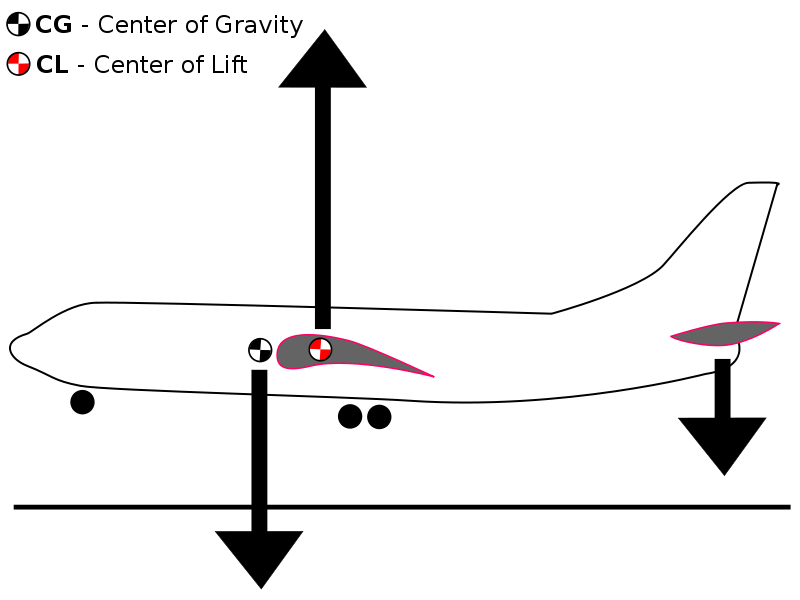 El equilibrio longitudinal de un avión es equivalente al equilibrio de un velero ciñendo: Fuerza aerodinámica de las Alas (avión) --> Fuerza aerodinámica de las Velas (velero) Fuerza de la gravedad (avión) --> Fuerza hidrodinámica de la orza (velero) Fuerza del timón de profundidad (avión) --> Fuerza del timón (velero) Que el velero esté equilibrado en ceñida es un gusto, sí, pues el velero navega solo con la caña trincada, pero lo gordo del asunto es que si tiene un Equilibrio estable en ceñida es porque la fuerza hidrodinámica se encuentra a popa del centro de gravedad y entonces el velero es cómodo y seguro a la hora de bajar las Olas La yola es un gran invento de los pescadores, y es un buen atisbo del equilibrio aeronautico (un buen montón de pioneros de la aviación se estrellaron y se mataron hasta que se entendió esta cuestión del equilibrio estable) Las ventaja del balandro moderno es su magnífica capacidad de ceñida: un balandro moderno de crucero ciñe unos 10 grados más que un velero de dos palos, y un buen balandro de regatas -ya uno grandote ya un bote de vela ligera- es capaz de ceñir tal vez unos 18 grados más que un velero de dos palos tremendos balandros recientemente botados (como Comanche y Safran II) han llevado el palo hasta el centro de la carena por motivos aerodinámicos, pues al centrar el palo se consigue un aparejo una migajita más eficiente, bueno, un motivo más, pero para un bote pequeño pienso que hay razones más poderosas en fin, al centrar el palo de un balandro cae una bandada de pájaros en la red Editado por U25pies en 20-08-2016 a las 20:05.
|
|
#1115
21-08-2016, 10:26
|
||||
|
||||
Re: Veleros pequeños
 Safran II por desgracia los franceses se me han adelantado, así que ya no tengo prisa, me hacía la ilusión tonta de que mi pequeñajo fuera el primero: -centro de la carena muy muy a popa (tal vez -10% de la línea de flotación) -palo centrado en el centro de la carena (que está a popa del centro del barco) -centro de gravedad reculé (como ellos dicen) muy muy reculé -apéndice que agarra el lastre ... más más reculé, espectacularmente a popa, Safran I (2005) llevaba el borde de ataque del apéndice que agarra el lastre en s5 (esto es: en el 50% de la línea de flotación) y Safran II (2015) tiene el borde de ataque del apéndice que agarra el lastre en s6 (60% [!!!] de la línea de flotación) como mi barquito soñado
|
|
#1116
22-08-2016, 10:53
|
||||
|
||||
Re: Veleros pequeños
 reculé, reculé, más reculé, todo reculé para mí la cuestión del velero pequeño es por un lado cómo hacer un bote de vela ligera habitable sin estropearlo -sin estropear la hidrodinámica de un bote de vela ligera con orza abatible- y, por otro lado, cómo hacerlo seguro: los minimalistas extremos que navegan en botes abiertos consideran el vuelco un acontecimiento normal, pero para mí es una línea roja infranqueable: quiero un botecito monstruosamente lastrado con una orza lastrada enorme Comanche y Safran II los han diseñado los mismos en Comanche se pusieron a jugar con un código CFD ... y cada vez que movían el palo un poco más hacia popa conseguían más fuerza, lo que ocurría ejque estaban descubriendo el mediterráneo: estaban descubriendo el Ala Delta y en Safran II el lastre tan a popa proporciona un trimado del casco como un bote de vela ligera o un surfista en una tabla de surf
|
|
#1117
22-08-2016, 11:04
|
||||
|
||||
|
Re: Veleros pequeños
Cita:
 Me encantan tus explicaciones cofrade U25pies! 
__________________
____/)_____
|
|
#1118
22-08-2016, 20:46
|
||||
|
||||
Re: Veleros pequeños
 Baba 30 me he enterado que Jimmy Cornell ha puesto a la venta su despampanante bicharraco de aluminio con orza abatible (García 45) y va y pide 600 mil euros y ojo cuidao que no tiene el IVA pagado y, entonces, carallo, ¿cuánto costaría nuevo y con todo pagado? Steve Dashew en sus libros cuando habla de "veleros pequeños" se refiere a veleros de 40 pies de eslora (!) aunque ya sabemos que Steve Dashew es más exagerao que yo que ya es decir, que por cierto Steve Dashew para la jubilación ya va por la segunda motora, y a veces lo pienso cuando los norteamericanos hablan de "veleros pequeños" se refieren a cosas como el Baba 30, que a mí me gusta un montón ... y viendo su precio en el mercado ... ah, contradicciones siempre contradicciones disfruto el velero que tengo, me encanta cruzarme con otros veleros -incluso cuando me adelantan :-(, me gusta ver veleros al llegar a puerto, me gusta hablar de veleros, en fin, esto es una locura ... sana
|
|
#1119
22-08-2016, 21:42
|
||||
|
||||
|
Re: Veleros pequeños
La contradicción insalvable
La contradicción insalvable ejque para ir contra las olas lo suyo es una carena pesada y para ir a favor de las Olas lo suyo es una carena ligera para mi pequeñajo soñado de 6 metros pienso en cargar agua de Mar en unos tanques de lastre en las bandas, según mis cálculos lograría una Potencia del 15% del Desplazamiento y tal vez quizá así ... (un bote de vela ligera como un 470 con un tripulante haciendo trapecio tiene una Fuerza/Potencia del 28% del Desplazamiento) los IMOCA han decidido prohibir la carena de batea (scow) lógico y natural pues si ya ceñir con un ultraligero es dar tremendos botes si los IMOCA se pasan aún más de rosca con una carena de batea (como una batea de mejillones o una gabarra) entonces al navegante habría que atarlo con cadenas para que el barco no lo mande a la luna la ola corta, la maldita ola corta es lo que mata al bote pequeño y ligero
|
|
#1120
22-08-2016, 21:45
|
||||
|
||||
|
Re: Veleros pequeños
Cita:
Entiendo y comprendo perfectamente "tu locura". ;-) por este tipo de locura.
|
|
#1121
22-08-2016, 22:33
|
||||
|
||||
|
Re: Veleros pequeños
Me gusta mucho el Scamp en la versión de Howard Rice, que estoy planteando construirme una unidad.
¿Hay alguien de este Hilo, que esté tan enamorado de este barquito como yo, y piense en darle "marcha" al contrachapado y al epoxy, para hacerse una unidad?. Admito todo tipo de sugerencias en público; en privado, sólo los que quieran o piensen seriamente hacer trabajos en "paralelo". Estoy en el centro del mapa. Vivo en Galicia. Cuidarse.
|
|
#1122
25-08-2016, 23:11
|
||||
|
||||
|
Re: Veleros pequeños
Subo el Hilo a primera página, para repetir la misma cuestión en el sentido de animar a algún colega amante del contrachapado y el epoxy, a realizar conjuntamente un SCAMP en su versión "trivela".
Saludos.
|
|
#1123
26-08-2016, 00:01
|
||||
|
||||
|
Re: Veleros pequeños
Cita:
Mas cofrades lo veran. Suerte.
__________________
|
|
#1124
02-09-2016, 12:07
|
||||
|
||||
Re: Veleros pequeños
 https://en.wikipedia.org/wiki/Alfred...ial%22_Johnson Alfred "centennial" Johnson Alfred "centennial" Johnson dicen que es el primer aventurero que cruzó el Atlántico en solitario en un bote de 20 pies de eslora, y de Oeste a Este, que no tiene nada que ver con cruzar el Atlántico por los alisios: de Canarias al Caribe se puede ir en casi cualquier cosa que flote es sabido que se puede dar la vuelta al mundo por los trópicos casi con cualquier cosa que flote, Webb Chiles cruzó un trozo del Océano Pacífico así (!!!) ... 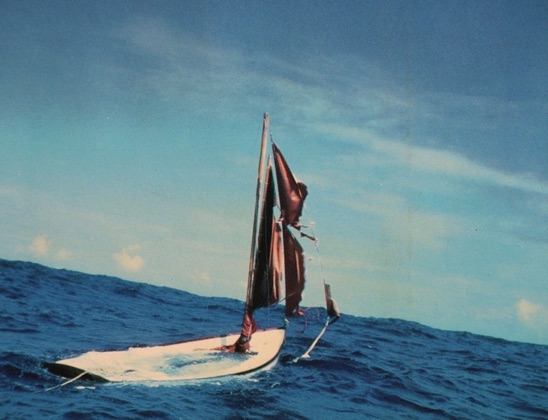 ... mientras racionaba unos botes de mermelada y otras escasas vituallas, y los dos -el bote naufragado y la balsita de goma desde la que fotografía su bote naufragado- llegaron a una isla de vez en cuando hacía excursiones desde la balsita al bote naufragado para hurgar por los tambuchos y encontrar algún tesoro es llamativo cómo racionó la comida y la bebida Al precursor o primogénito de esta saga de locos, Alfred "centennial" Johnson, le ocurrió toda la lista de desgracias del navegante solitario en veleros pequeños, lo pasó realmente mal, lo pasó fatal 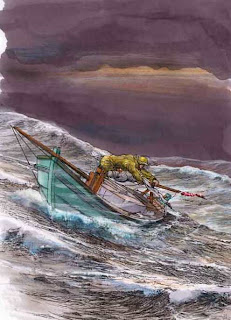 actualmente su bote se conserva en un museo  + habitabilidad escasilla espacio angosto y humedo, mejor dicho a veces era difícil saber si había más agua fuera o dentro, ¿cocinar? ¿cómo? Alfred vivía mejor dicho sobrevivía en un naufragio contínuo, seguramente incluso se podría decir que Webb Chiles tumbado en su balsita mientras meditaba en el trópico lo pasó algo mejor que las miserables condiciones en las que Alfred Johnson cruzó el Atlántico Norte + el vuelco no estaba bien pensado, volcar era un tragedia + el velero no navegaba solo ésto es un engorro fenomenal; Webb Chiles, en cambio, ha hecho en diversos veleros no sé si 40 mil o 60 millas o tropecientas mil millas con "sheet-to-tiller" que es "escota del foque a la caña" + Alfred no podía dejar el velero parado, quieto parado aparcar el velero para que descanse el hombre y la máquina es esencial para un velero pequeño
|
| 3 Cofrades agradecieron a U25pies este mensaje: | ||
|
#1125
02-09-2016, 13:37
|
||||
|
||||
|
Re: Veleros pequeños
la capacidad de hacer surf, de hacer surf bien, bien bien de verdad, ésto es esencial para un botecito pequeño realmente capaz el estudio de las aventuras de los locos minimalistas revela una listica de cosas esenciales para un velero pequeño realmente capaz
|
|
Ver todos los foros en uno |
|
|













 Modo lineal

